Pieces that each look right
Sheaf theory is the mathematics of how small pieces join into one whole picture, and of finding exactly where they do not. Each agent's answer is one piece. The calculation asks whether the pieces can be joined into a single consistent account of the facts.
The result is a number, worked out the same way every time. When it is zero, the answers fit. When it is above zero, there is a contradiction somewhere in how they join, and the calculation says where.
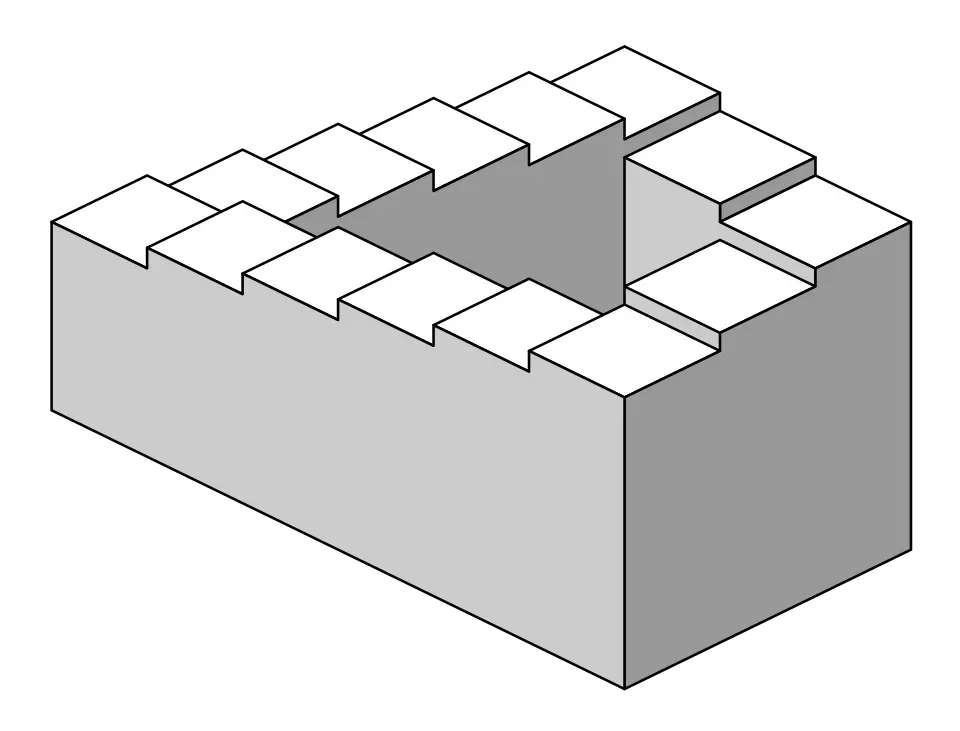
Every step is sound. The staircase goes nowhere.
The check before an action
TheGuardianAgent rests on a plain rule: no agent should act without an ID and a check. The scan, the watch and the door deal with the first half. They find the agents, name who answers for each, and ask an agent who it is. They do not use this mathematics.
The mathematics is the second half. Before an agent's action goes through, a panel of AI models looks at it separately, and the calculation measures whether their reasoning fits together. An action that does not hold together waits for a person.
That check runs today in Sheaf, the engine we built first, as a gate in front of an agent's tools. A door can stand in front of a Sheaf gate, so an agent is asked who it is, and then whether what it wants to do adds up.
Published, and open to checking
The mathematics is published: the paper (DOI) and the technical whitepaper. A patent is pending on the method.
We say what the measure does and what it does not. It measures whether a set of answers is consistent. It does not prove that a consistent set of answers is true.
Begin with the first half
Find the agents inside your company before you check what they do. The scan takes about two minutes and costs nothing.
Run the free scan