AI agents now act
When AI only answered questions, a wrong answer was a nuisance. Now AI agents act. They read email, change records and move money, and most companies cannot list the ones they have.
The losses are already public. We keep a sourced list of them, the AI Loss Ledger. In most of them, software was able to act for a company and nothing stood over it.
TheGuardianAgent is built on a plain rule: no agent should act without an ID and a check. The ID says who answers for the agent. The check asks whether what it is about to do holds together. The check comes from published mathematics, described on the mathematics page.
Who is behind it
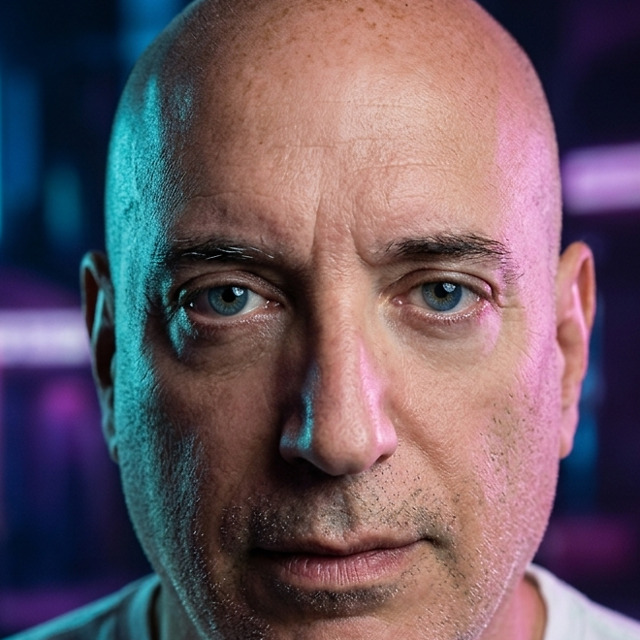
Jack Widman, PhD
Jack founded TheGuardianAgent on a conviction and a habit of mind. The conviction: you cannot take an AI agent on trust. You have to know who answers for it, and you have to be able to measure whether its reasoning holds together. The second is a question mathematics can answer. The habit: he is drawn to the places where deep, abstract mathematics turns out to be exactly the tool a practical problem needs. He holds a PhD in mathematics (topology) and has spent many years building software. Before TheGuardianAgent he built Sheaf, the check on an AI's reasoning. Alongside his work here he stays active in research as an affiliated researcher in the foundations of computer science at Ben-Gurion University.
See what is inside your company
The scan lists every app and AI agent that can reach your company's Microsoft 365. It takes about two minutes and costs nothing.
Run the free scan